The Burnout Nobody Posted About
You know that moment when you realize your laptop battery is dying, your WiFi is spotty, and you’ve been in this hostel common room for six hours straight because your coworking space never opened? That’s the part the Instagram posts never show. The hustle aesthetic of digital nomadism looked clean in 2021. In 2026, it’s looking exhausted.
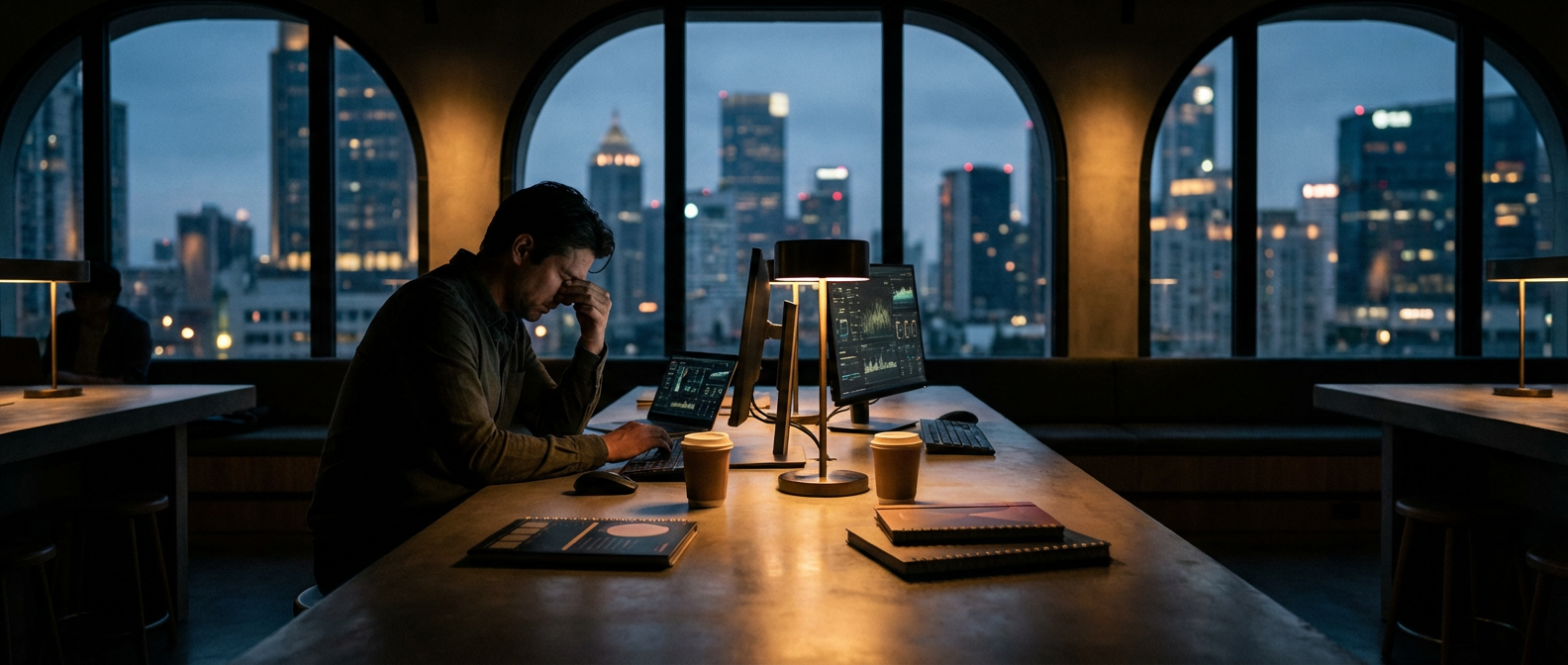
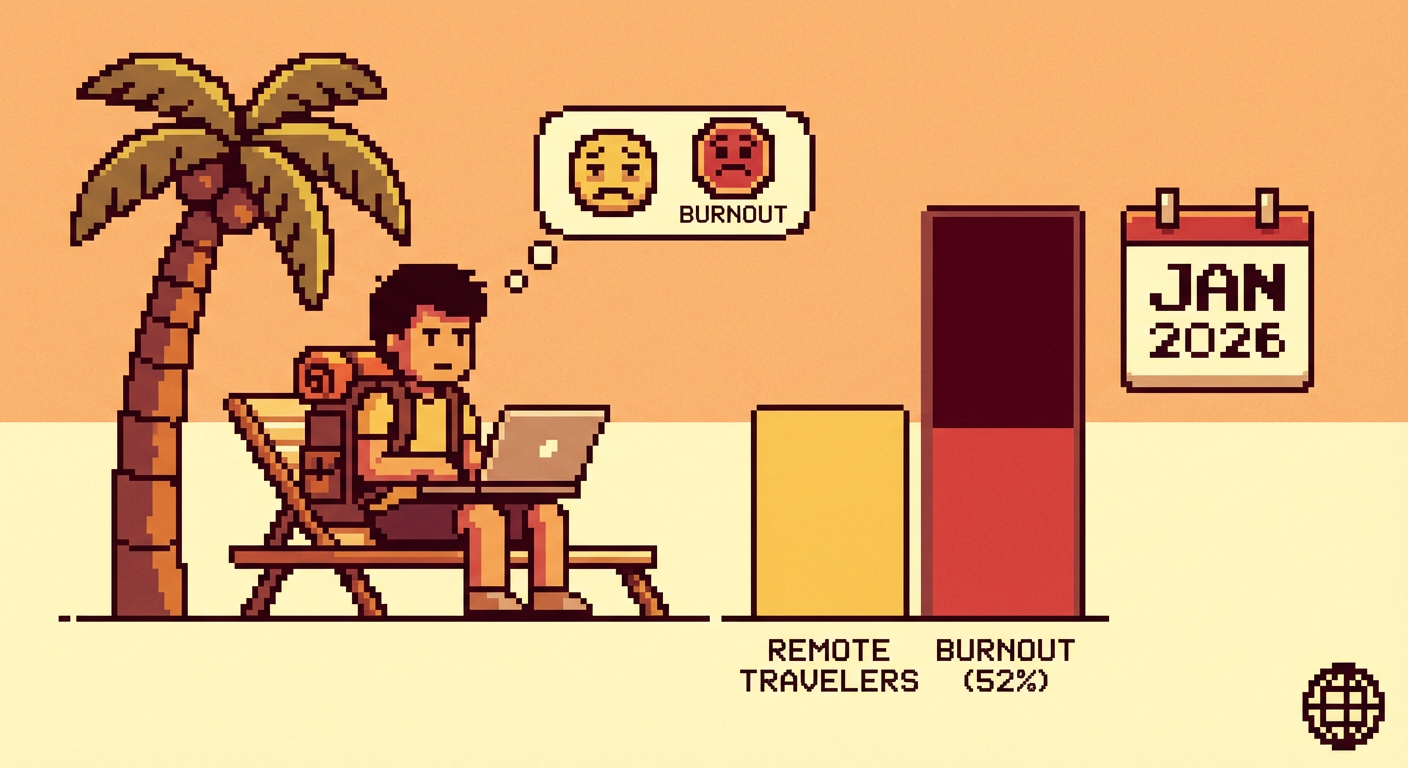
According to the latest Buffer State of Remote Work 2026 report, over half of full-time remote workers who mixed travel with their jobs hit moderate to severe burnout within eighteen months. Let that sink in. These weren’t people working retail or running on impossible timelines. These were the ones who supposedly had it all figured out. The freedom. The adventure. The perfect setup.
What happened is what always happens when you combine two big things at once: work and travel both demand your full attention. Turns out you can’t fully give either one.
The Mental Health Numbers Tell a Different Story
Insurance doesn’t lie. Mental health claims among nomads jumped 33 percent between 2023 and 2025 according to SafetyWing nomad insurance and resources. That’s the gap between the lifestyle working beautifully in theory and the reality of being alone in a Bangkok apartment at 2 AM, fielding Slack messages while your team’s day is just getting started.
Isolation creeps up on you. You’re surrounded by people but nobody knows your work struggles. Your coworkers are a screen away. The loneliness isn’t dramatic. It’s quiet. It’s the kind that builds slowly until you realize you haven’t had a real conversation with someone who understands what you do in three weeks.
The physical toll compounds too. Carrying your office means your back hurts in new chairs. Your sleep schedule fractures across time zones. You get sick more often. Everything costs mental energy when nothing is familiar.
Visas Exploded, But the Dream Didn’t Scale With Them
Here’s something wild: the number of countries offering digital nomad visas jumped from five to sixty-five between 2020 and January 2026. The infrastructure caught up to the idea. Portugal got easy. Mexico got easy. Thailand made it official. The world basically said yes to remote workers.
But more access doesn’t fix burnout. More visa options don’t solve timezone math or the fact that your apartment in Lisbon still has shaky internet when you need to be on a client call. Removing those barriers maybe eliminated some reality checks that were doing useful work. Now anyone could try it. Most found out the hard way that they shouldn’t.
The paradox is real: we opened all the doors and discovered that walking through every door at once is exactly what breaks people.
The Quiet Redesign: From Solo Roaming to Structured Everything
This is where it gets interesting. The format that’s actually working looks nothing like the original dream. It looks intentional. It looks like roots and boundaries.
Airbnb data from the end of 2025 shows workcation pods are the new move. Groups of three to five people booking the same place for thirty-plus days, with year-over-year growth of 55 percent. These aren’t party houses. They’re quiet, stable bases where remote workers are building actual community. Someone cooks breakfast. Someone organizes a coworking day. You have people to eat dinner with who understand why your meeting ran long.
Then there’s the research that really matters: MIT Sloan Management Review studied employees with structured hybrid nomad arrangements, a fixed home base plus two planned four-week trips per year. These people reported 31 percent higher job satisfaction than fully location-independent workers. Higher satisfaction. Fewer claims. Less burnout. They got to travel. They also got to be people with homes.
The design philosophy shifted from maximum freedom to sustainable rhythm. From anywhere all the time to somewhere specific, then somewhere else specific, then home. The ladder works better than the endless horizontal line.
What the Redesign Actually Looks Like
The digital nomads who aren’t crashing out anymore look like this: they’ve got a home city. They know a coffee shop. They have a dentist. They’ve unpacked enough times to know what they actually need in a space. Then they take their structured trips, two a year, four weeks each, with notice given to their employers and plans made with real precision.
They’re traveling. They’re experiencing things. They’re not pretending the working part doesn’t matter or that adventure solves everything. They’re not trying to be everywhere. They’re trying to be somewhere good, and then somewhere else good, and then somewhere they know again.
The dream didn’t die. It just got a mortgage and a library card. It got realistic about what a human body and mind can handle. It stopped fighting the part of us that actually wants stability alongside novelty.
What’s your setup looking like right now? Are you riding the full nomad wave or have you noticed the exhaustion creeping in? I’m genuinely curious whether the structured approach sounds like freedom or like compromise to you. Either answer is honest.