The Money Behind the Madness
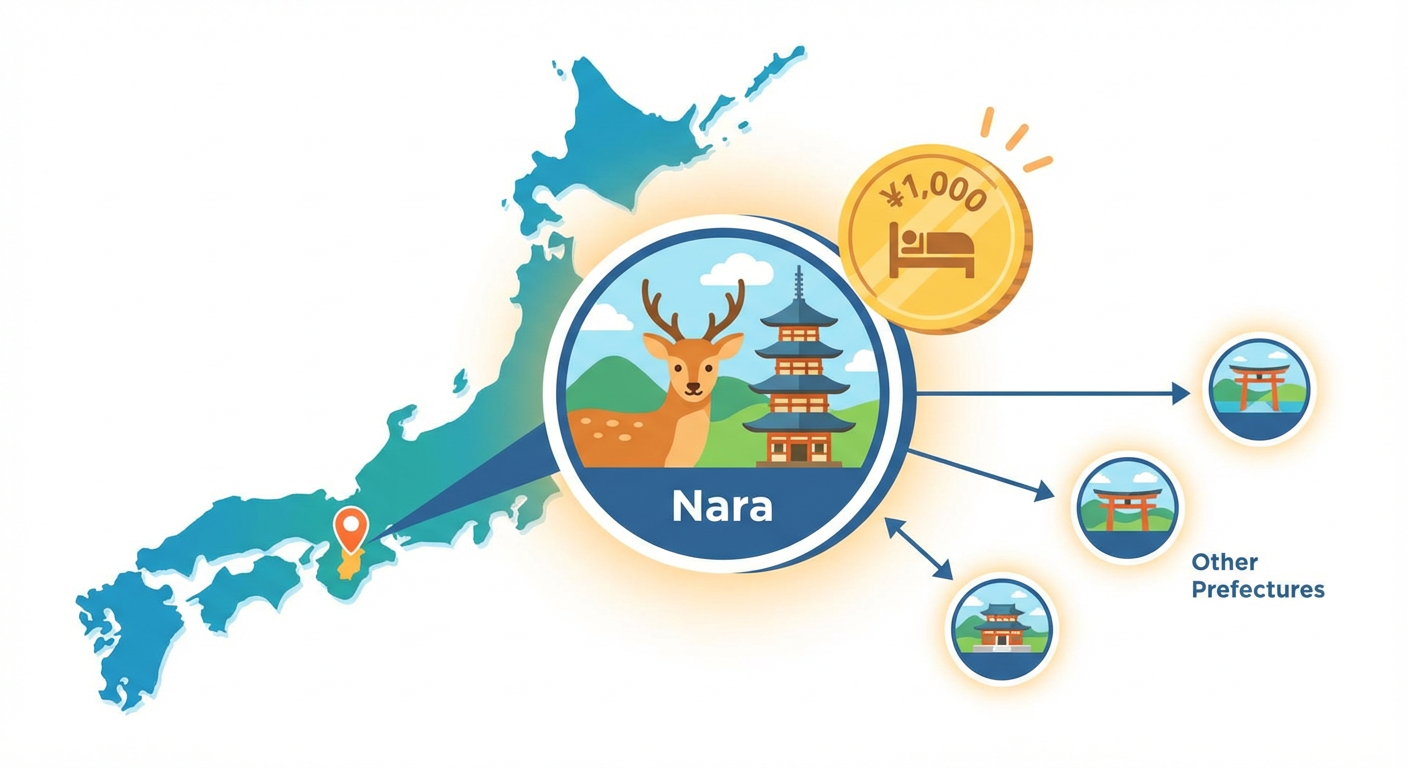
Let’s start with what’s actually happening. Kyoto just became the most expensive place in Japan to stay. Starting October 2025, that city slapped a lodging tax of up to ¥10,000 per night on high-end accommodations. That’s roughly $67 USD per night on top of your room rate. It’s the highest municipal lodging tax in the entire country. Nara followed in April with a ¥1,000 per-night levy. At least 12 other prefectures jumped on the tax train. This isn’t random. This is cities saying: we are drowning.
Japan welcomed 36.9 million foreign visitors in 2024. That crushed the old record of 31.9 million set in 2019. Read that again: 31 to almost 37 million in five years. The Japan National Tourism Organization visitor statistics paint a picture of a country that went from managing tourism to being steamrolled by it. The yen hovering around 155 to the dollar through early 2026 made Japan feel like a bargain for Western travelers. So everyone came. All at once.
What the Tax Actually Funds (And Why That Matters)
Here’s where this gets complicated. These taxes aren’t just Kyoto being greedy. They’re funding infrastructure repairs, public restroom maintenance, and waste management. They’re paying for English signage and staff training. They’re literally subsidizing the experience tourists are paying to have. Without them, those 500-person lines at temples wouldn’t just be annoying. The temples would actually break.
But here’s the honest part. These taxes are also a soft cap disguised as revenue generation. Kyoto is essentially saying: we don’t want to tell you to stop coming, but we’d really like you to stop coming. The Kyoto City lodging tax official announcement framed it as a way to “promote sustainable tourism,” which is political speak for “please consider visiting somewhere else.” The yen is still cheap enough that even with the new tax, a decent ryokan costs less than a mid-range hotel in New York. So the tax might slow things down a bit. Or it might just fund better bathrooms while the crowds keep coming.
The Mount Fuji Moment: What Happens When Cities Actually Draw the Line
Mount Fuji’s Yoshida Trail is the clearest example of a city reaching its breaking point. Last year they literally closed the gate. No climbers. Done. This year they brought back the ¥2,000 fee and capped it at 4,000 hikers per day. That’s not a deterrent. That’s a hard ceiling. They’re not trying to manage your experience anymore. They’re trying to keep the mountain from eroding into the next prefecture.
It’s worth asking: what does Japan owe tourists? Nothing, actually. It owes its own residents safe infrastructure, accessible temples that aren’t mob scenes, and mountains that still exist in fifty years. When Kyoto raises its tax or Fuji closes its gates, they’re not being hostile. They’re being honest about scarcity.
How to Visit Kyoto Without Being Part of the Problem
Here’s what actually works. Go in January or February. Yes, it’s cold. Yes, the gardens aren’t blooming. And yes, Arashiyama Bamboo Grove will have maybe forty people instead of four thousand. You’ll see what Kyoto actually looks like when Kyoto locals are the majority. The food tastes better. The temples feel sacred again instead of like theme parks. The tax still applies, but at least you’re not contributing to a system that’s actively destroying what you came to see.
Skip the obvious stuff. Don’t stay in Gion if you can avoid it. The ryokans there are beautiful and also the epicenter of the problem. Stay in Kuramae or Fushimi or literally anywhere that requires a thirty-minute train ride. You’ll find better restaurants anyway. You’ll meet actual people. And you’ll spend less on accommodation, so even with the new tax, you come out ahead. Eat where salarymen eat. Go to museums on weekday mornings. Take the local bus, not the tourist shuttle. Pay attention to how residents move through the city.
Honestly? Skip Kyoto entirely some years. Go to Kanazawa or Takayama or Naoshima. They have everything Kyoto has except the crushing crowds. The taxes are lower. The temples are just as real. The sake is better because no one’s packaging it for Instagram.
The Uncomfortable Part We Should Actually Talk About
Here’s what I keep coming back to. Japan isn’t required to stay exactly the way you want it for your photo shoot. The tax isn’t unfair. The caps aren’t rude. Kyoto’s infrastructure was built for maybe 2 million residents and 8 million annual visitors, not 36.9 million international visitors alone. Something has to give.
So the question isn’t really whether the tax is justified. It is. The question is whether knowing that changes how you travel. Does it make you more likely to visit in off-season? Does it push you toward regional cities? Does it make you think about whether you actually want to stand in line for two hours to photograph a temple you’ll forget about in six months? Those are the real decisions that matter.
Japan is still affordable. Still incredible. Still worth visiting. But it’s not an infinite resource. The travel industry loves talking about sustainable tourism, but sustainable usually means “extracting value without feeling guilty about it.” Real sustainability is harder. It means showing up at odd times, staying longer in fewer places, eating where tourists don’t, and being genuinely okay with not doing everything. It means understanding that the tax isn’t something happening to you. It’s something Kyoto is doing to protect itself. And maybe that’s the most honest part of any trip.
What’s your actual experience been with these new taxes? Have you noticed changes in how crowded places feel, or does it still seem like everyone’s everywhere? Drop a comment with what you’ve seen on the ground. The real data is in what travelers actually observe, not what tourism boards announce.