The Connectivity Myth Nobody Talks About
Here’s what nobody tells you before your first long stay abroad: Wi-Fi everywhere is a lie. You’ll arrive in a neighborhood that looks thriving, pull out your phone, and find yourself in a dead zone. Maybe it’s the subway tunnel that swallows signals whole. Maybe it’s the rural village where your accommodation sits just far enough from the router to become useless. Maybe it’s 2 a.m. and you’re trying to find the nearest pharmacy, and your international roaming plan has already chewed through $40 for the privilege.
A 2025 survey found that nearly half of international travelers experienced connectivity problems that actually mattered. Not just Instagram-loading-slowly mattered. Safety-and-navigation mattered. The kind where you’re alone in an unfamiliar place and your phone suddenly becomes a paperweight.
The travelers who’ve figured this out aren’t waiting for 5G to reach every corner of the planet. They’re building offline toolkits. Real ones. The kind that work in the subway, the hiking trail, the mountain town, and the poorly-lit alley at midnight.
Maps That Actually Work When Nothing Else Does
Offline maps have come a long way from five years ago. The versions circulating among people who actually spend months in foreign countries are lean, detailed, and obsessively current. Late 2025 saw major updates that matter: vector-based databases covering everything from main highways to the narrow residential streets where actual humans live.
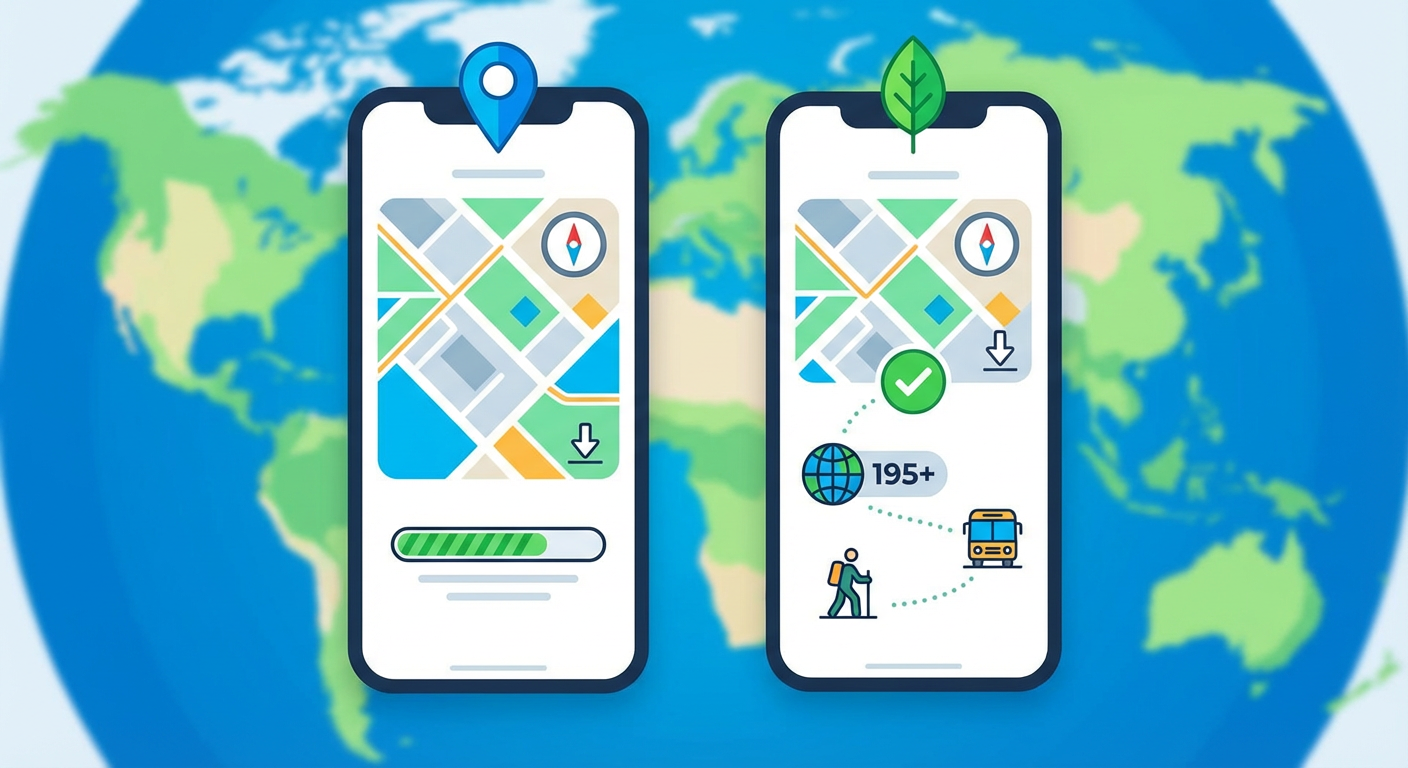
Organic Maps offline travel app made moves this past year, expanding coverage to over 195 countries with full OpenStreetMap integration. You get hiking trails. You get public transit lines. You get the kind of granular detail that lets you navigate like someone who belongs there, not someone frantically checking turn-by-turn directions while pedestrians sigh around you. Maps.me pushed similar updates in the same window, keeping the competition sharp enough that both options are genuinely strong.
Download these before you land. I’m not being dramatic. Do it on the airport Wi-Fi. Do it twice if you’re staying longer than two weeks. The peace of knowing you can find a hospital, a train station, or yes, a decent coffee shop without burning through data is worth more than whatever phone storage it takes.
The Devices That Changed Solo Travel in 2025
Garmin’s inReach Mini 2 hit a turning point last year. Sales jumped 34 percent, mostly driven by solo travelers and trekkers operating in places where cell coverage disappears entirely. At $349.99, it’s not cheap. But you’re buying something specific: two-way messaging, location tracking, and SOS capability when you’re genuinely unreachable. These aren’t features that impress at dinner parties. They’re features that matter when you’re alone on a mountain or in a hostel in a country where you don’t speak the language.
You don’t need it if you’re city-hopping on a two-week vacation. You do need to think about it if you’re planning to stay put, explore beyond the tourist corridors, or work remotely from places where reliability isn’t guaranteed. It’s the kind of decision that gets easier the longer you stay somewhere, because you start understanding which neighborhoods have coverage and which don’t.
The device ecosystem around offline travel has matured enough that you can now build layers of redundancy without carrying a backpack that weighs thirty pounds. Experienced travelers actually do this. It’s not paranoia. It’s just arithmetic.
eSIMs, Regional Plans, and Knowing Your Options
The eSIM market stopped being experimental around 2024 and became genuinely functional by 2025. Airalo eSIM plans and coverage checker reported hitting over 10 million users mid-year, with one plan dominating long-term traveler discussions: regional Asia coverage, 1GB across 19 countries, eight dollars. Let that sink in. You can test connectivity, stay reachable, and not gamble your emergency fund on roaming rates.
The math here is simple. You don’t need unlimited data if you have offline maps and a proper strategy. You need just enough connectivity for navigation verification, emergency communication, and maybe checking a restaurant review before committing to lunch. Paired with solid offline maps and local SIM cards for longer stays, eSIMs cut out the panic of choosing between expensive roaming or complete disconnection.
Most phones made in the last three years support eSIM. Check yours. Download an eSIM before you land. Activate your offline maps. You’re now operating with better tools than 95 percent of tourists at the airport.
Building Your Trip Hub in Offline Mode
The final piece that separates people who feel lost abroad from people who feel anchored is organization. Early 2025 brought an offline mode update to Notion, and it spread through digital nomad and long-term traveler communities in ways the product team probably didn’t anticipate. Over 3.2 million members on Reddit’s solo travel forums cited it as their go-to trip planning and documentation hub.
This matters because the longer you stay somewhere, the more information you accumulate. Restaurant addresses. Local friends’ contact info. Bus schedules. Apartment maintenance requests. Medical clinic hours. The random insights that make a place feel less foreign and more like somewhere you actually live. Notion’s offline capability means you’re not scrambling to load cloud files on spotty Wi-Fi. It’s all there, searchable, organized however your brain works best.
The shift from tourism to residency, even temporary residency, demands this kind of infrastructure. You’re not just grabbing photos to prove you went somewhere. You’re actually living in a place. You need your information accessible. You need your maps working. You need a way to communicate when Wi-Fi dies.
What This Actually Changes
Building an offline toolkit isn’t about rejecting connectivity. It’s about refusing to be helpless without it. The travelers who’ve figured this out move differently in foreign cities. They wander further. They take detours. They stay longer in neighborhoods because they know they can find their way back without burning data or panicking.
The tools exist now. They’re not perfect, and they’re not replacements for good planning or common sense. But they’re reliable enough that you can build a traveling life around them instead of constantly gambling on signal strength and roaming rates.
Have you built your own offline setup? What got added to your kit after your first month abroad? Drop it in the comments. The best travel wisdom comes from people who’ve actually lived somewhere, not just visited it.